The Ultimate Guide on How to Choose the Right Farm Gate for Your Property
February 3, 2026
Introduction
Your farm gate is more than an entrance.1 It's the first line of defense for your property, livestock, and equipment. A poorly chosen gate can sag, rust, break, or even become a safety hazard. With so many options—from materials and styles to sizes and hardware—the decision can feel overwhelming. You need a gate that withstands weather, contains animals, and endures daily use for years to come.
This comprehensive guide is designed to cut through the confusion. We will walk you through every critical factor in the selection process. By the end, you’ll have the clarity and confidence to make an investment that protects your land and lasts a lifetime. Let's dive into the essential steps on how to choose the right farm gate for your specific needs.
How to Choose the Right Farm Gate: Your Step-by-Step Blueprint
Choosing isn't just about picking the prettiest option. It's a strategic decision. Follow this framework to ensure you don't miss a critical detail.
Assess your primary need: Is it for livestock control, driveway access, or both? Will it need to open daily for tractors? This initial question dictates everything that follows.
Consider your environment: Coastal properties need extreme corrosion resistance. Heavy clay soils that shift require different installation than rocky ground.
Think long-term: A gate is a 10–20 year investment. Consider future plans. Will you get different livestock? Need wider machinery? Buying with the future in mind saves costly replacements.2
Understanding the Different Types of Farm Gates
Your first major choice is the gate style. Each type serves a distinct purpose.
1. Hinged Gates
The most common traditional style. They swing open on posts with hinges.
Best for: Main driveways, pedestrian access, and permanent boundary lines.
Pros: Strong, secure, and can be very wide.
Cons: Require a clear swing arc and level ground.
2. Sliding Gates
These gates move horizontally on a track or rollers.
Best for: Areas with limited swing space, steep or uneven ground.
Pros: Don't sag over time, perfect for tight spaces.
A type of sliding gate that "floats" without a ground track, supported by an overhanging beam.
Best for: High-use areas with snow, ice, or gravel that would clog a track.
Pros: Extremely smooth operation, very low maintenance.
Cons: Higher initial cost and more involved installation.
4. Cattle Grids (Vehicle Access Only)
A grid set in the ground that vehicles can drive over, but livestock won't cross.
Best for: High-traffic vehicle areas where containing livestock is key.
Pros: No need to stop and open a gate.
Cons: Expensive to install, doesn't stop people or wildlife.
Farm Gate Materials: The Ultimate Showdown
The material defines your gate's lifespan, strength, and maintenance.
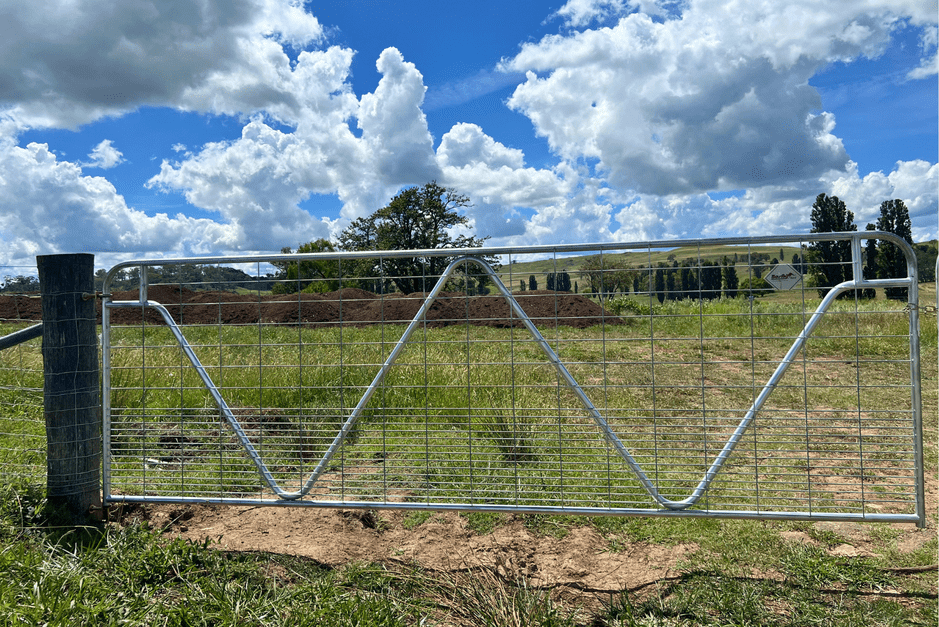
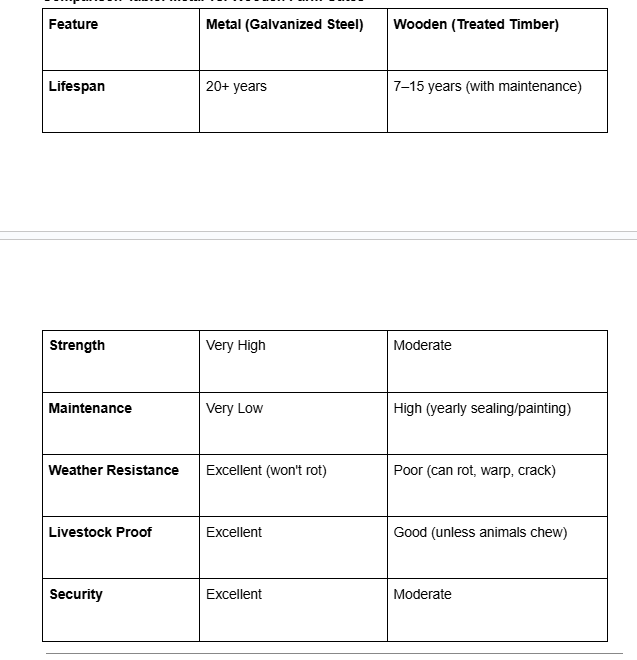
Metal Farm Gates (Galvanized Steel): The industry standard for durability.3 Incredibly strong and long-lasting. Ideal for heavy-duty farm gate applications.
Wooden Farm Gates (Timber): Offers a classic, traditional look but requires high maintenance (regular staining/sealing) and can warp or rot over time.
Wire Mesh or Tubular Gates: Lightweight and cost-effective, but less robust for containing large animals.
Comparison Table: Metal vs. Wooden Farm Gates
What Size Farm Gate Do You Need? A Critical Calculation
Getting the size wrong is a common and costly mistake. Here’s your farm gate sizes guide:
Width is king: Measure the widest piece of equipment that will use the gate, then add at least 1–1.5 meters (3–5 feet) of clearance on either side.
Standard Dimensions: While a 12-foot (3.6m) gate is standard for many tractors, modern harvesters and wider implements often require 14-foot or 16-foot (4.8m) openings. You can view a variety of standard and heavy-duty gate sizes here.
Height for Livestock: For cattle, a gate should be at least 1.2m (4ft) high. For horses or jumping-prone livestock, 1.5m (5ft) or higher is recommended.
Matching Your Gate to Its Specific Use Case
Your farm gate buying guide must factor in function:
For a Farm Driveway: Prioritise strength and security. A heavy-duty hinged or cantilever metal farm gate is ideal.
For Livestock (Cattle/Sheep): Choose a gate with minimal "hoof-catching" gaps. Heavy-duty cattle yard gates with oval rails are designed specifically to withstand animal pressure without causing injury.
For Uneven Ground: A sliding or cantilever gate is your best friend, as they don't require a level swing path.
The Hidden Details: Hardware and Installation
A perfect gate is useless on weak posts. Farm gate installation is half the battle.
Posts are the foundation: They should be set in concrete at a depth of at least 1/3 of their above-ground height. According to Meat & Livestock Australia (MLA) standards, wooden posts should be at least 250mm in diameter, while steel posts should be set 900mm deep.
Hinges and Latches: Use heavy-duty hardware. For double gates, ensure you use a reliable double gate fastener to prevent sagging and ensure a secure closure.
Farm Gate Cost Factors: Budgeting for Quality
Price varies based on material, size, and style. While galvanized steel has a higher upfront cost, it typically offers a lower total cost of ownership due to its 20+ year lifespan. For those looking for official transport-compliant access, refer to the Transport for NSW Farm Gate Access Guide for safety and mass limit regulations.
Ongoing Care: Farm Gate Maintenance Tips
Metal Gates: Rinse occasionally. Check for chips in the galvanized coating and touch up with cold gal paint.
Wooden Gates: Re-seal or paint every 1–2 years.
All Gates: Lubricate hinges and latches annually. Check post alignment and tighten bolts.
Conclusion
How to choose the right farm gate ultimately boils down to understanding your property's unique demands and making informed, future-proof decisions. It’s a long-term investment in the security and functionality of your land.
Ready to secure your property with the perfect gate? Our experts are here to guide you from selection to installation. Explore our full range of farm gates and hardware today and let's build a solution that stands the test of time.
Frequently Asked Questions (FAQs)
Q1: What is the best farm gate for livestock like cattle?
A: For cattle, a heavy-duty farm gate made from galvanized steel with vertical or oval bars is ideal. It provides the strength to withstand pushing and prevents hooves from getting caught.
Q2: How wide should a farm gate be for my driveway?
A: Measure your widest vehicle (including mirrors), then add at least 1 meter of clearance on each side. For most Australian farms, a 4.8m (16ft) gate is a practical choice.
Q3: Are metal farm gates better than wooden ones?
A: In most rural applications, yes. Metal gates offer superior weather resistance and lifespan with significantly less maintenance.
Q4: Can I install a farm gate myself?
A: While DIY is possible for basic hinged gates, professional installation is recommended for sliding systems or difficult soil to ensure the posts remain stable over time. You can find detailed installation guidelines via Training.gov.au for industry-standard practices.
Your farm gate is more than an entrance.1 It's the first line of defense for your property, livestock, and equipment. A poorly chosen gate can sag, rust, break, or even become a safety hazard. With so many options—from materials and styles to sizes and hardware—the decision can feel overwhelming. You need a gate that withstands weather, contains animals, and endures daily use for years to come.