


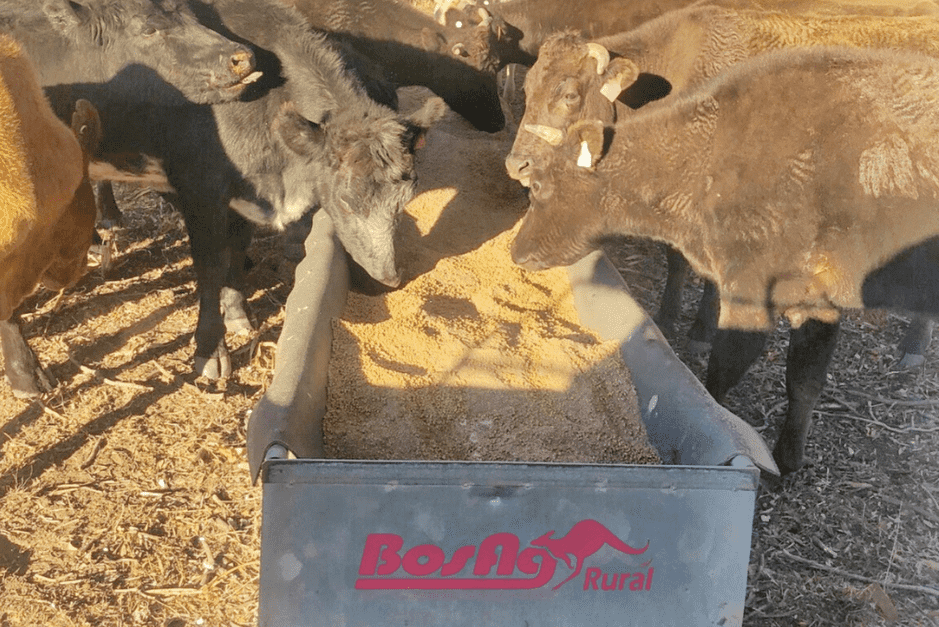
If you're pouring hard-earned money into feed bins only to watch a significant portion end up on the ground, spoiled, or stolen, you're not alone. Feed waste is the silent profit killer plaguing operations of all sizes, from small homesteads to large commercial farms. This isn't just a minor inefficiency; it's a direct drain on your bottom line, with studies suggesting up to 30% of purchased feed never reaches an animal's digestive system. The problem compounds—wasted feed means wasted money, increased labor for cleanup, and can even attract pests and promote disease. But what if there was a straightforward, highly effective solution already at hand?
The answer lies not in buying cheaper feed, but in revolutionizing how you deliver it. This comprehensive guide will unveil the precise mechanisms of how feeders reduce waste, transforming your feeding strategy from a cost center into a powerhouse of efficiency. We'll move beyond theory and provide actionable, proven strategies that lead to tangible savings, increased operational smoothness, and healthier livestock. By the end, you'll understand why investing in the right feeding system is the single most impactful step you can take for your farm's profitability this year.
Understanding how feeders reduce waste begins with breaking down the primary causes of loss. Once we identify the "leaks" in your system, the role of a proper feeder becomes crystal clear.
The Top Culprits of Feed Waste on Your Farm
Before solving a problem, you must diagnose it. Here are the most common ways feed disappears without providing nutrition:
A well-designed feeder directly attacks each of these points.
The Engineering Behind Waste Reduction
Modern feeders aren't just containers; they are engineered systems for controlled delivery. Here’s the science of feeder waste reduction in action:
By combining these features, a proper feeder creates a disciplined, clean, and efficient feeding station that puts you in control. For durable, waste-reducing options like sheeted ring feeders and mesh designs ideal for hay and round bales, check out the Livestock Feeders category at BosAg Rural.
The phrase cost saving feeders isn't marketing fluff—it's a financial reality. Let's translate the waste reduction into concrete numbers, because farm feeders cost savings are the ultimate goal.
Calculating Your Potential Savings
The math is compelling. Assume your operation spends $20,000 annually on feed.
ROI Timeline: A high-quality feeder system for a mid-sized operation might cost $1,500. Your save money on animal feed initiative pays for itself in under 9 months. Every year after that, the savings are pure profit.
Beyond direct feed cost, consider the reduce labor cost benefit. Less waste means less time spent shoveling spoiled feed, cleaning pens, and managing pests. This frees you up for higher-value tasks, making your entire operation more efficient. For evidence on how feeder design impacts waste (e.g., cone vs. ring feeders reducing losses significantly), see this Noble Research Institute study on hay feeder waste reduction.
Not all feeders are created equal. Selecting the right type is critical for maximizing feeder efficiency for your specific animals.
Gravity Feeders (Bulk Feeders)
How They Work: Feed flows by gravity from a large hopper into a trough as animals eat.
Best For: Cattle, sheep, goats, and free-choice feeding of dry grains/pellets.
Waste-Reduction Features: Typically have adjustable flow controls and protective lips. Look for models with a design to reduce waste that includes a slanted bottom to ensure complete feed flow and prevent stale corners.
Ideal For: Rural land owners and operations looking for low waste feeding systems that don't require daily filling. Explore round bale feeders and square bale feeders at BosAg Rural for heavy-duty, waste-minimizing options.
Automatic Feeders
How They Work: Use timers, sensors, or augers to dispense precise amounts of feed at set intervals.
Best For: Poultry, pigs, and dairy operations where controlled rationing is key.
Waste-Reduction Features: The ultimate in portion control. By providing fresh feed only when needed, automatic feeders benefits include near-zero spoilage and dramatic reduction in pest access. Perfect for implementing controlled feeding systems.
Consideration: Higher upfront automatic feeders cost is offset by long-term savings in feed and labor.
Trough & Bunker Feeders with Grills
How They Work: Simple, robust troughs fitted with horizontal bars or a "creep" grill.
Best For: All types of livestock, especially when feeding supplements or total mixed rations (TMR).
Waste-Reduction Features: The grill physically prevents animals from burying their heads and flinging feed. It forces them to eat neatly. This is a classic, highly effective feeder design to reduce waste.
Species-Specific Champions
Head-to-Head: Automatic vs. Manual Feeders
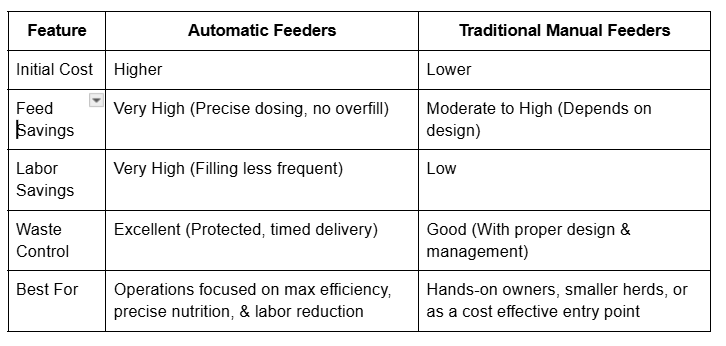
Verdict: If your primary goal is to unlock maximum farm feeders cost savings and you have the capital, automatic feeders are worth the cost. They are the pinnacle of how feeders reduce feed waste. However, a well-chosen, well-managed manual feeder (like a heavy duty bunker with grills) still represents a massive improvement over open feeding and offers tremendous value.
You can buy the best feeder in the world, but poor placement sabotages its effectiveness. Proper feeder placement to reduce waste is a master skill.
A neglected feeder becomes a wasteful feeder. Simple feeder maintenance preserves your savings.
Pro Tip: Keep a log of maintenance. It helps you track performance and anticipate when parts might need replacement, avoiding a sudden failure that leads to waste.
The evidence is overwhelming. The question of how feeders reduce waste is answered by physics, animal behavior, and simple economics. From preventing costly spillage and spoilage to deterring pests and slashing labor hours, a strategic investment in the right feeding system is a direct investment in your farm's profitability and sustainability. The benefits of automatic feeders and well-designed manual systems aren't just about containing feed—they're about controlled feeding systems that give you command over one of your largest expenses.
Every day you delay, you're literally watching dollars disappear. The savings are calculable, the efficiency gains are real, and the upgrade to a low waste feeding system is one of the smartest operational decisions you can make. Don't let another feeding cycle pass by with the old, wasteful routine.
Ready to transform your feed from a cost into an investment? Our experts specialize in matching the perfect feeder for waste reduction to your specific livestock, scale, and goals. We help rural land owners just like you achieve dramatic farm feeders cost savings.
[Contact Us Today for a Free, No-Obligation Feeding Efficiency Audit]. Let's analyze your current waste and build a plan to stop the loss. Your bottom line will thank you.
For more on waste-reducing feeders tailored to Australian farms, browse the full Livestock Feeders range at BosAg Rural, including specialized heavy-duty sheeted ring feeders.
Q1: How do feeders reduce feed waste exactly?
Feeders reduce waste through controlled access (like grills and small ports), integrated spill collection trays, environmental protection from weather, and pest-deterring designs. This prevents animals from scattering, spoiling, or contaminating their feed.
Q2: What type of feeder wastes the least feed?
High-quality automatic feeders typically waste the least, as they dispense precise portions at set times, leaving no feed exposed to pests or weather between meals. For manual feeding, gravity feeders or troughs with restrictive grills offer excellent waste reduction.
Q3: Are automatic feeders worth the higher cost?
For most operations, yes. While the initial automatic feeders cost is higher, the combined savings in reduced feed waste (often 20-30%) and significant labor reduction typically provide a return on investment in less than one to two years.
Q4: How much money can I actually save with better feeders?
Savings depend on your current waste level, but it's common for farms to save 15-25% on their annual feed bill. On a $20,000 feed budget, that's $3,000 to $5,000 per year in direct savings, plus indirect labor benefits.
Q5: Do feeders for goats really need to be different?
Absolutely. Goats are notorious for wasting feed. Specialized feeders for goats reduce waste by having small, strategic openings that prevent them from using their dexterous lips to pull out and drop large mouthfuls, a key cause of feed spillage.
BosAg Rural is a 100% Australian owned family business supplying wholesale Agricultural Hardware & Building Products to Australia’s Rural Retail Industry.
Melbourne
West Footscray VIC
Contact via Head Office


